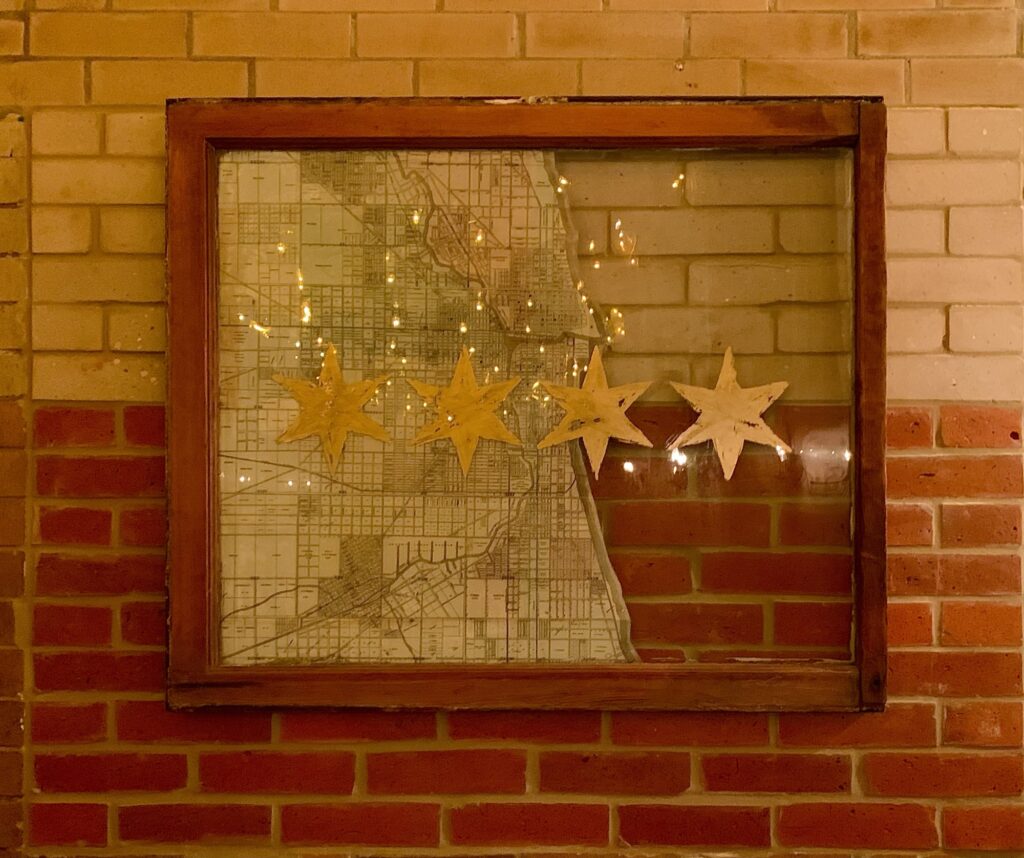
How Whiner Beer and its neighbors turned a forgotten building into a living ecosystem of flavor.
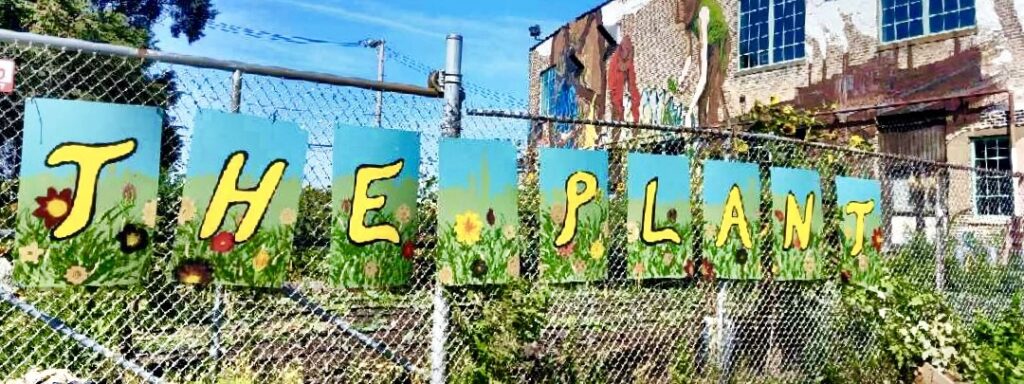
The gutted corridors of Chicago’s old meat-packing district, where the roar of trucks and the hiss of steam once filled the air, a new kind of craft is quietly taking hold: at Whiner Beer Company, beer is no longer just brewed—it’s re-imagined. Located within The Plant in the Back of the Yards neighborhood, Whiner stands as a testament to what happens when brewing ambition meets the possibility of circular economy.
Origins & Philosophy
Head brewer and co-founder Brian Taylor started his beer career about 22 years ago at Flying Dog Brewery in Denver. “It was the first time I had a job where it wasn’t miserable,” he recalls. A grounding in craft followed at the maturing institution of the Siebel Institute of Technology in Chicago, and then overseas at the brewing academy in Germany. From there, stops at Boulevard Brewing Company and then Chicago’s urban beer battle-zone propelled him forward. His partner, Ria Neri, whose background includes Four Letter Word Coffee, joined him in building a brewery with one basic principle: build it to waste less.
From the get-go, Brian and Ria figured that the average brewery uses roughly ten barrels of water for every barrel of beer produced—and that simply couldn’t last. Their target: three barrels of water for every barrel of beer. In a city like Chicago, with aging infrastructure and high competition for attention, they chose The Plant not just for rent or space, but for mission synergy. The building itself houses more than a dozen businesses, all collaborating on sustainability: algae processors harvesting fermentation CO₂; an on-site five-acre farm; composting systems turning spent grain into soil.
The Place & The Process
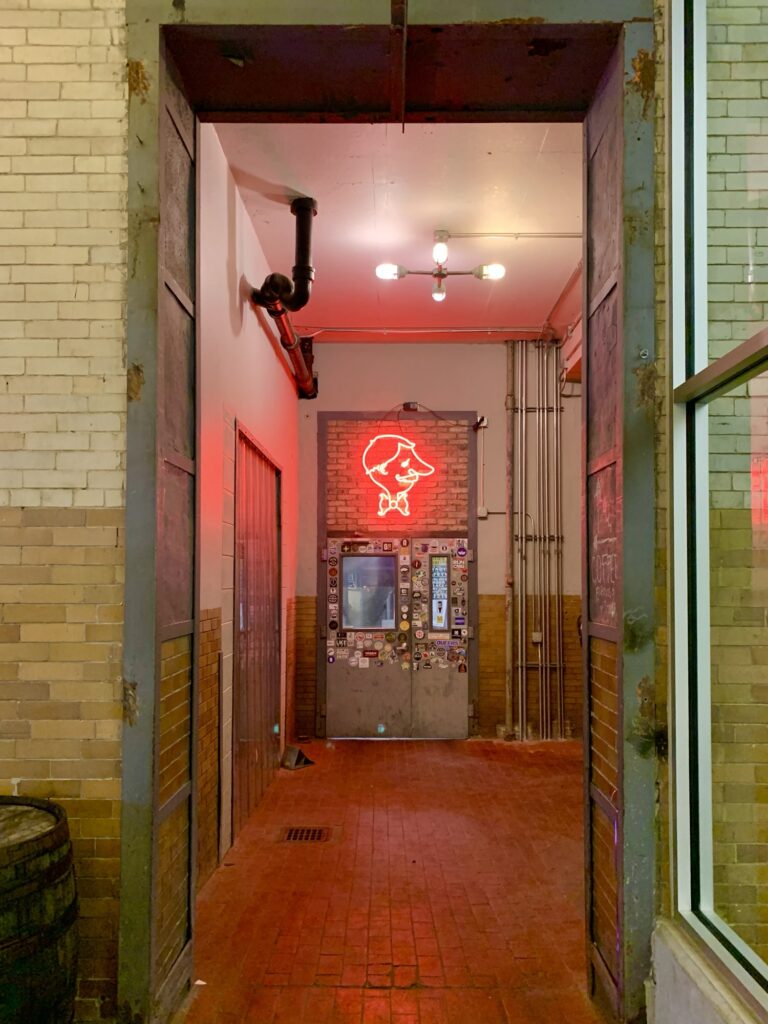
The Plant is no blank slate. When Whiner moved in, in ~2012, the building was part meat-packing ruin—exposed beams, holes in floors, buckets of lard left in old coolers. Within that warehouse shell, they built a 30-barrel brewhouse with 60-barrel fermenters. It wasn’t about going big for bragging rights—it was about making an impact.
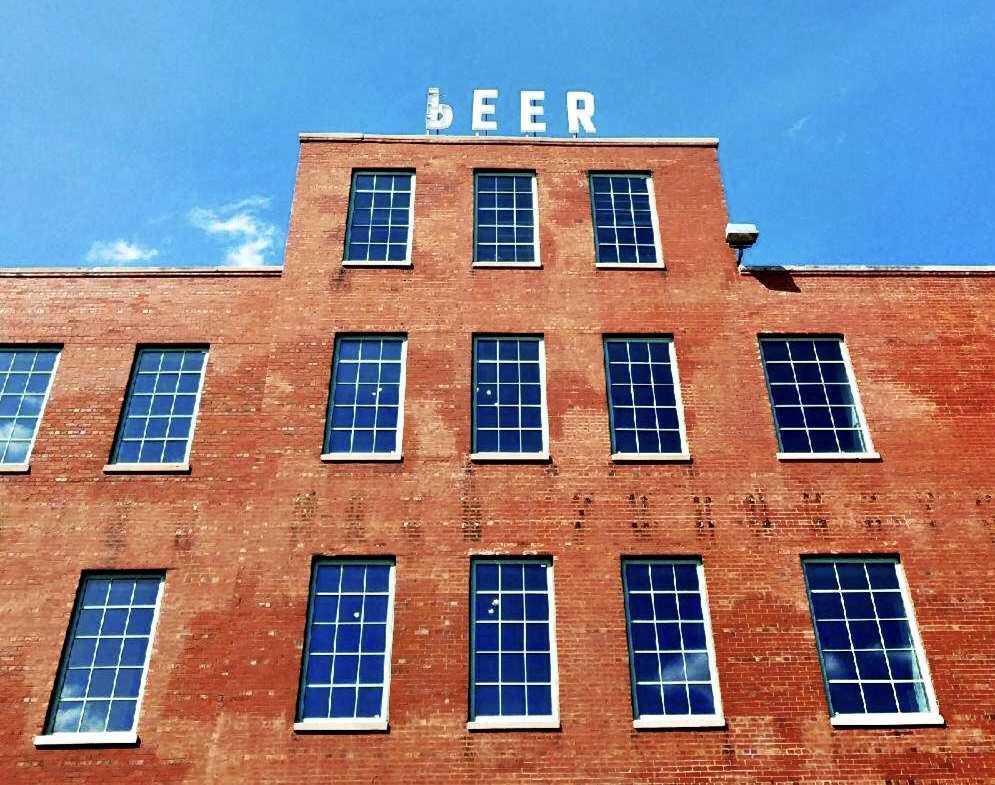
Inside the taproom, you’ll still see heirlooms of the past: a weathered sign from Peer Foods (a meat-packing company that once called this neighborhood home) now repurposed. The ‘p’ was flipped to a ‘b’ and now glows above the brewery as marker of Chicago’s layered industrial roots.
The Beer
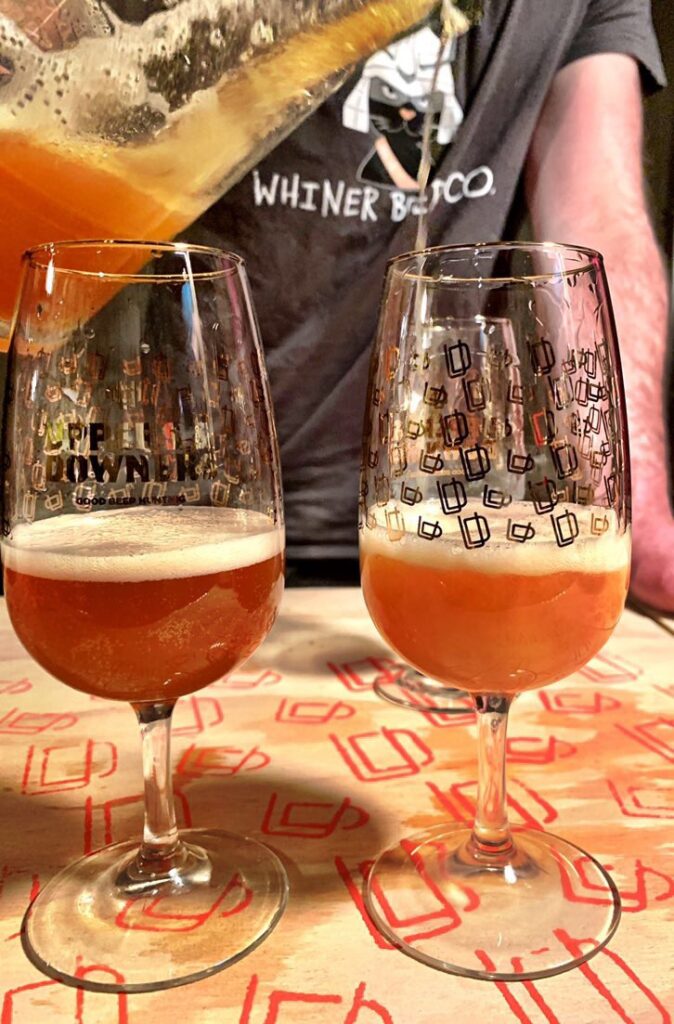
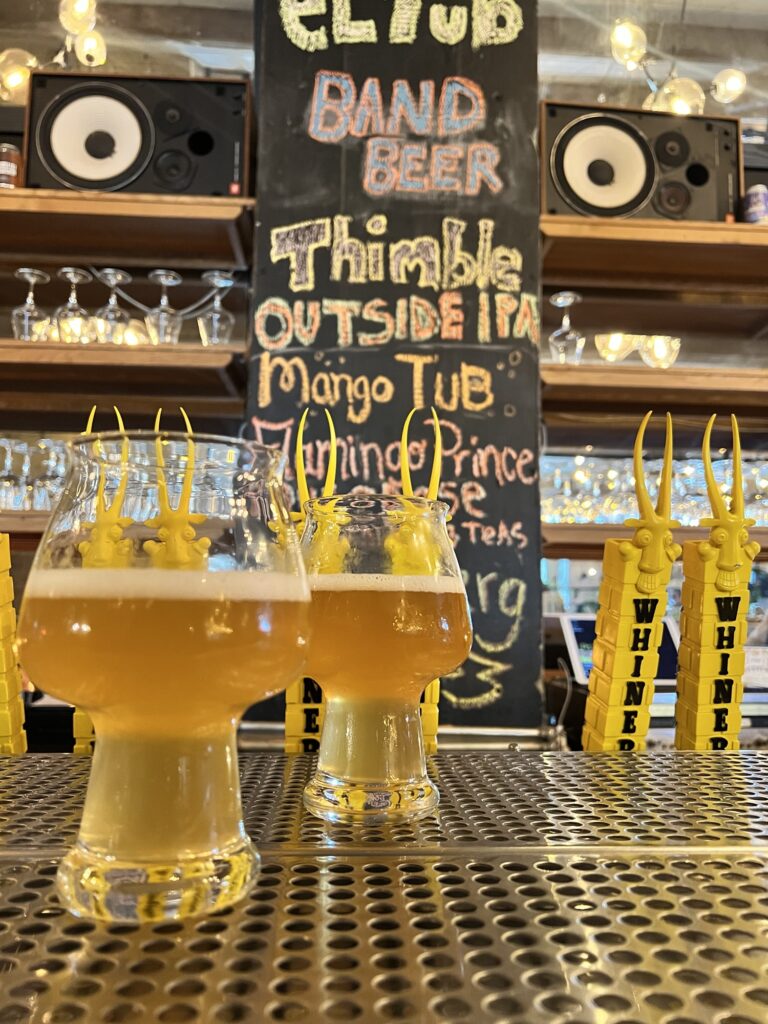
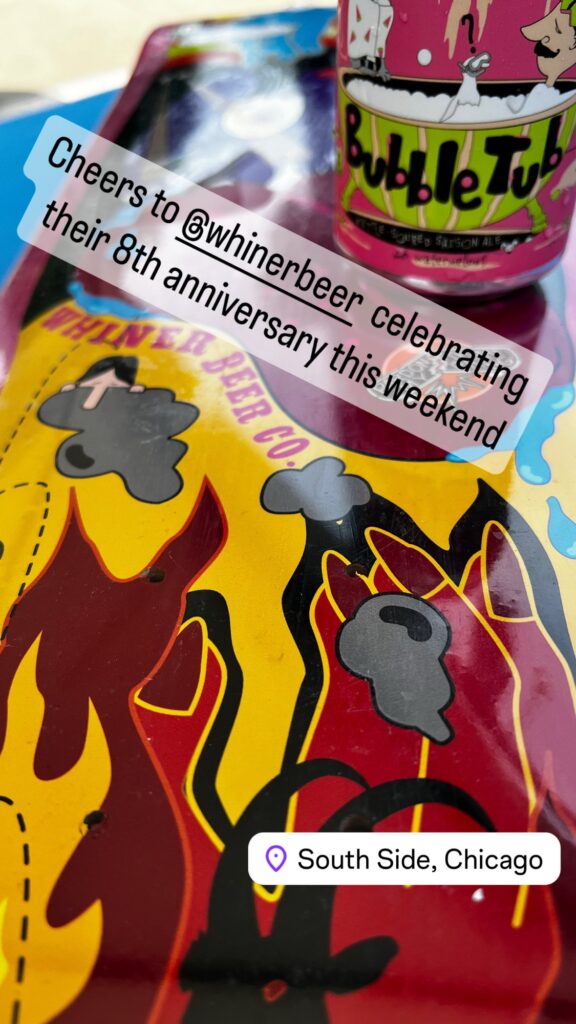
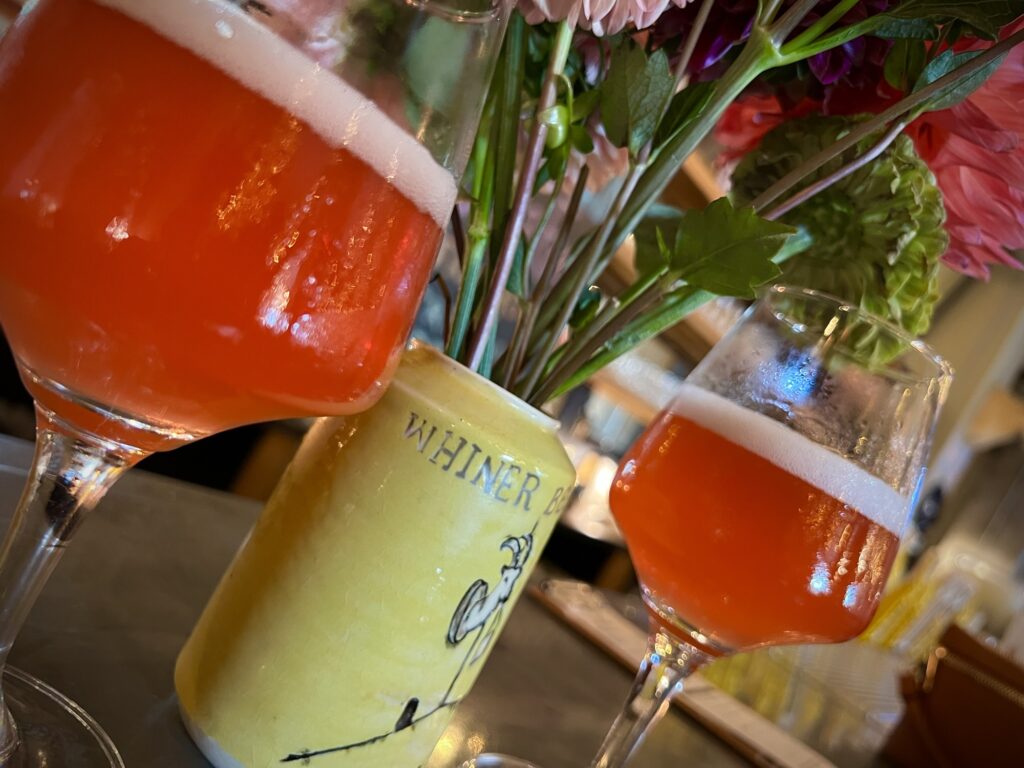
Whiner’s practical idealism translates into beer that is seriously drinkable yet thoughtfully crafted. Their flagship is a kettle-sour saison named Le Tub, crisp, tart, and finished with a Belgian yeast character that hints at old-world tradition while giving a nod to local drinkers. Brian notes they still make IPAs, but the focus remains on Belgian-influenced styles—“we’re a Belgian brewery at heart,” he says.
They also pull in ingredients from their house ecosystem: chamomile grown on the farm outside becomes the defining herb in a beer called Camo Meow, and honey from on-site hives makes its way into kettle additions for the “hot tub” beer, giving it floral lift and South-Side terroir. The brewery’s collaborations include tight work with the coffee roaster upstairs, where barrel-aged saisons have been paired with roasts from Ethiopia and Colombia.

Community & Culture
The choice to locate in Back of the Yards was not simply geographic—it was social. Brewing remains a mostly-white, mostly-male industry, and Brian knows this intimately. At a major industry conference, Ria was one of perhaps seven women among thousands of attendees. That observation became motivation: “If you want to be a brewer, and want to learn beer, we’re definitely welcoming you,” he says. Under head brewer Mel (they/them), and cellar operator Evan (gay, Bridgeport resident), Whiner fosters an open door and inclusive environment. This extends to the taproom calendar: birthday drag shows, queer-artist markets, a Pride block party on 46th Street featuring DJs from Detroit to Chicago. The vibe? A SouthSide brewery that isn’t aping the North Side—it’s building its own identity.
The Market & Mission
Still, location presents challenges. South of downtown, liquor-license moratoria in certain neighborhoods, fewer “bar-destinations,” and less volume make distribution tougher. So Whiner pursued the North Side initially—to build brand, find younger audiences, and earn the attention of bars and beer-drinkers who move fast. At the same time, the brewery keeps deep roots in its home neighborhood bar scene and supermarket accounts like Whole Foods and Mariano’s. The approach? Two-legged: strong taproom + smart distribution.
Whiner has grown quietly but with purpose. They traded in bottles for cans at launch (aluminum recycles more efficiently than glass) and continue to explore CO₂ recapture, water reuse, grain composting.
Why It Matters
What sets Whiner apart in a city overflowing with good beer is not just the beer—it’s the vision. In a place where old factories are turned into polished taprooms for Instagram, Whiner chose ruin with potential. They build not just a brewery but an ecosystem: one that reclaims water, works with beekeepers, grows herbs for the brew path, and nurtures community rather than crowd. They anchored themselves in the South Side not because it was easy, but because it mattered.
For the beer lover who’s visited the Logan Square roll-call of breweries, crossing the Dan Ryan to Back of the Yards is more than a change of scene—it’s a change of story. Here you’ll sip a saison fermented in 30-bbl tanks, brewed under the same roof as an algae startup, in a building that once saw hogs, lard buckets, and rail tracks. The past still hums; the future is quietly fermenting.
So order a flight of Le Tub, tap into the chamomile saison, tour the compost pile, and ask the bartender about the bees. Because a pint at Whiner isn’t just local—it’s intentional. And in a beer town like Chicago, that kind of intentionality tastes unmistakable.
— Nkosi